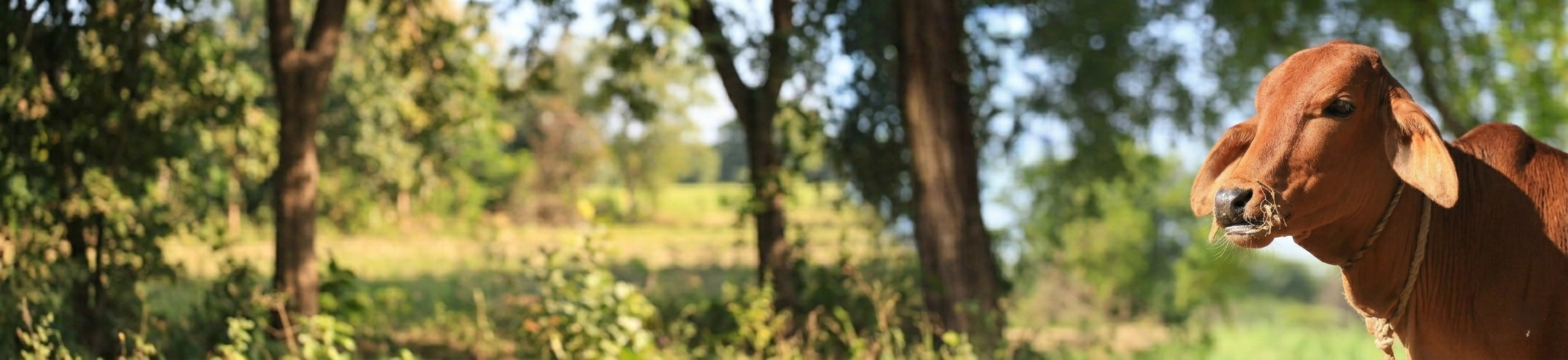

The Gir cow (Bos indicus) comes from the Gir Hills and forests of Kathiawar in Gujarat, India. It is one of the most distinct cattle breeds in the world. The Gir belongs to the Zebu family and holds a unique place among Indian desi breeds.
Whether you are a farmer, a buyer, or someone who wants to learn, this guide covers every physical trait that confirms Gir cow identity — from forehead shape to hoof color.
Gir cows are naturally adaptable and known for their excellent endurance.
Produces nutrient-rich A2 milk known for better digestibility and purity.

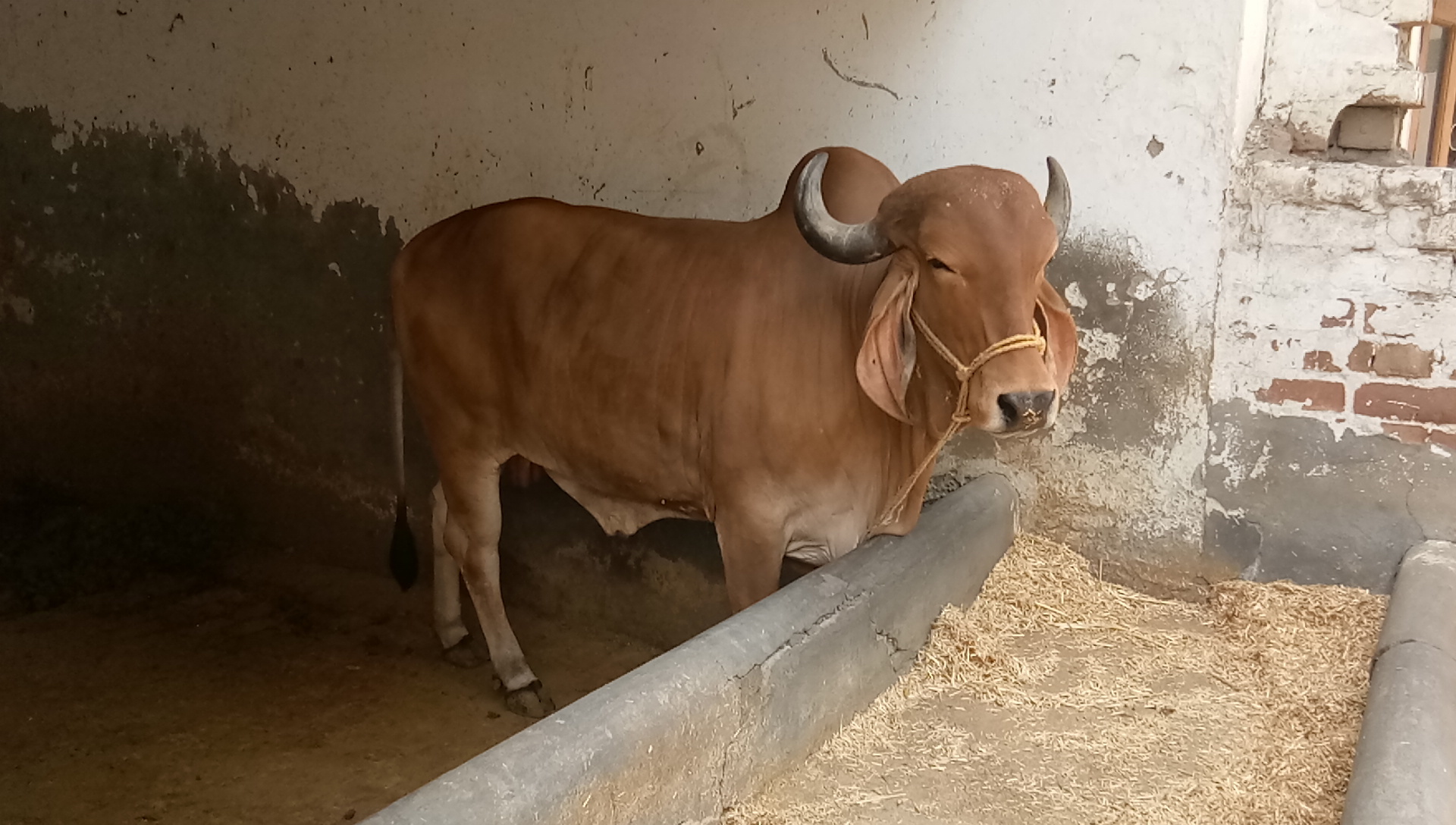
The Gir cow has the world's only ultra-convex (dome-shaped) forehead. This unique characteristic distinguishes it from every other cattle breed, whether indigenous or foreign.
Beyond its distinctive forehead, the Gir cow can be identified by a combination of physical characteristics that make breed recognition easier, even for first-time observers.
The Gir cow's ultra-convex forehead is its most distinctive physical feature and sets it apart from all other cattle breeds.
The breed is also known as Bhodali, Desan, Gujarati, Kathiawari, Sorthi, Surati, and internationally as Gyr. All names refer to the same breed.
The Gir cow has the world's only ultra-convex (dome-shaped) forehead. If the forehead is flat or only slightly curved, it is not a pure Gir.
Gir cow ears are long, pendulous, and naturally folded inward like a leaf with a small knot near the tip.
A high shoulder hump is a defining feature of the Gir breed and serves as a natural nutrient reserve.
Gir cow horns curve outward before bending backward and upward in a distinctive spiral or S-shape.
Coat colours range from red and yellowish-red to white with red or brown patches. Pure Gir cows are never completely black.
The tail is long and often reaches ground level, ending with a prominent tuft of hair.
A wide, loose fold of skin hangs from the neck and chest, helping the animal regulate body temperature.
Gir cows have a large, rounded udder with clearly visible veins, reflecting the breed's strong milk-producing ability.
Pure Gir cows have black, medium-sized hooves along with strong legs that are suitable for different terrains.
Cows stand 1.30–1.35 m tall and weigh 400–475 kg. Bulls reach 1.35–1.40 m and weigh 550–650 kg. Calves typically weigh 20–30 kg at birth.

Many sellers pass off hybrid or crossbred cows as pure Gir cows. Understanding the physical characteristics of a genuine Gir cow can help you identify the breed with greater confidence.
The dome-shaped forehead and spiral horn shape together are the two most reliable markers of a pure Gir cow. Always check both before making a purchase.
Dome-shaped forehead, long tail, leaf-folded ears, black hooves, spiral horns, prominent hipbones, soft glossy skin, and a coat that is never black.
Flatter forehead, shorter tail, straighter horns, mixed hoof colour, rougher skin, less prominent hipbones, and a darker or mixed coat.
These measurements represent the typical physical characteristics and production capacity of the indigenous Gir cow breed.
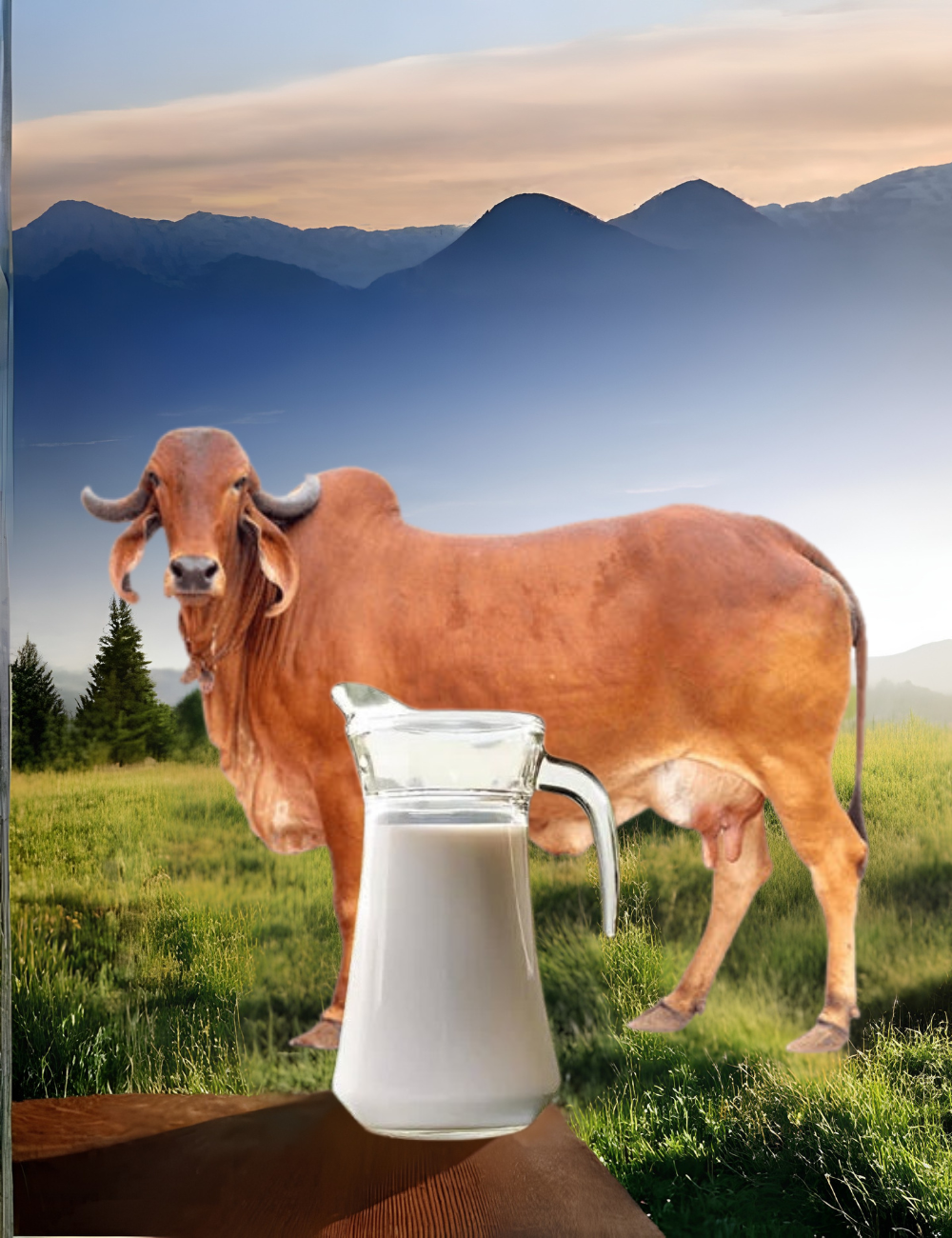
Gir cow milk is a pure A2 beta-casein milk. It does not contain the A1 protein that most hybrid and Jersey cows produce.
When the body digests A1 protein, it can release a peptide called BCM-7, which some research links to digestive discomfort. A2 milk does not release this peptide.
Gir cow milk, ghee, curd, urine, and dung together form what Ayurveda calls Panchgavya. Each product carries traditional medicinal value under the practice of Cowpathy.
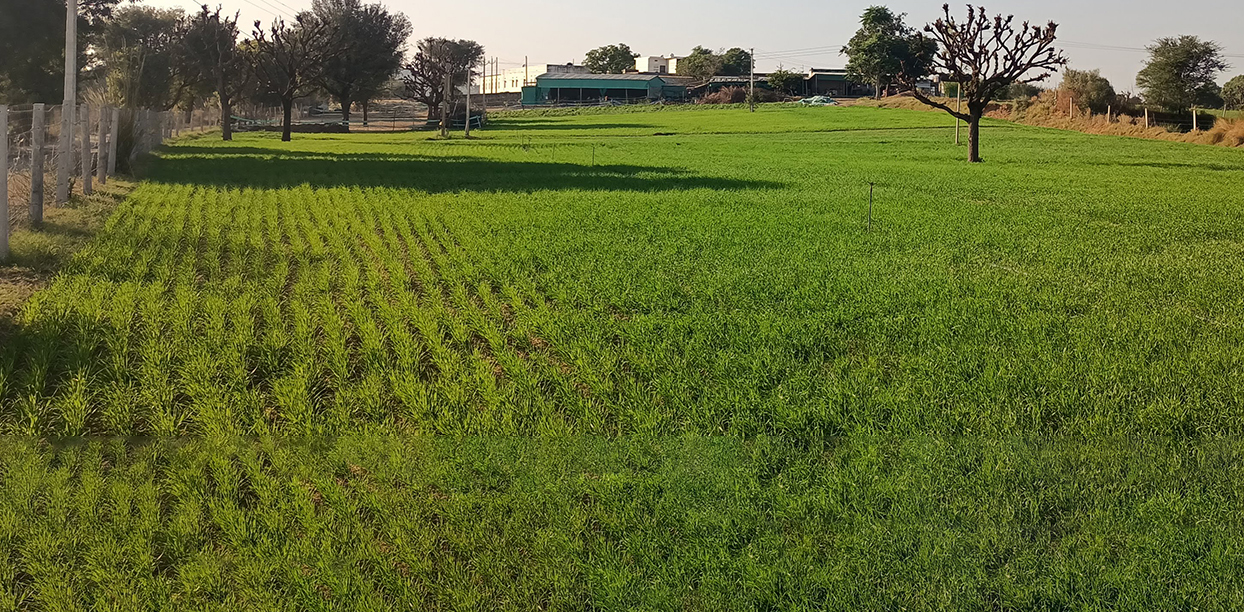
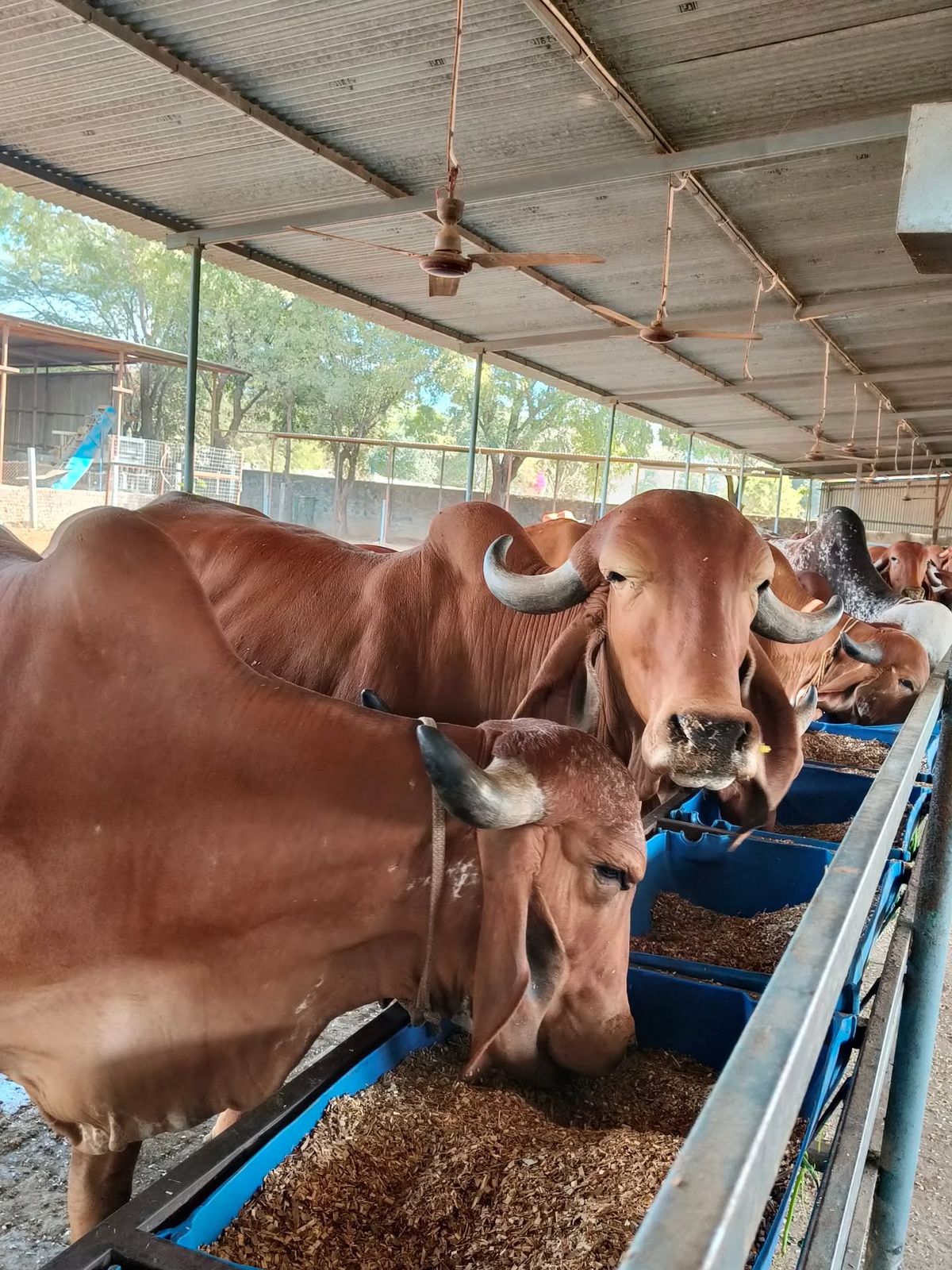
The Gir cow is regarded as the calmest of all Zebu (Bos indicus) breeds. It responds well to human presence and is known for its gentle, non-aggressive nature.
In Brazil, Gir cows walk into milking bails on their own, displaying the same cooperative behaviour seen in Friesian and Jersey cows under commercial dairy farming conditions.
At night, Gir cow herds naturally form a tight circle with their calves sleeping safely beneath the cows' necks. This social group behaviour reflects the breed's calm temperament and strong maternal instincts.

The Gir breed is native to the Gir Hills and forests of Kathiawar in Gujarat. The primary breeding districts in Gujarat are Amreli, Bhavnagar, Junagadh, and Rajkot.
About 37% of the total Gir cattle population lives across Rajkot, Bhavnagar, and Junagadh.
Beyond Gujarat, Gir cows are now bred across Rajasthan (including Jaipur, Kota, Ajmer, and Tonk), Maharashtra, Madhya Pradesh, Telangana, and parts of South India.
The breed's resistance to heat and tropical disease makes it a practical choice in all Indian climates.
The Gir breed was exported to Brazil, the United States, Mexico, and Venezuela. Brazil now holds one of the largest populations of Gir cattle outside India.
Brazilian breeders crossed Gir with Friesian cows to develop the Girolando, a high-yield dairy breed widely used across South America.
In Brazil, a Gir cow named Profana de Brasília holds the world record with a production of 17,120 kg in a single lactation.
In North America, Gir genetics contributed to the development of the American Brahman breed. Two famous Brahman foundation sires, Manso and Emperor, carried high Gir content. The Brahman's large hump, down-swept horns, and sloping hindquarters reflect this Gir ancestry.
In Indian culture and Hindu tradition, the Gir cow is more than livestock. The five products of the Gir cow—milk, ghee, curd, urine, and dung—form Panchgavya.
In Ayurveda, these products have been used for centuries in traditional health practices for humans and animals. This practice is known as Cowpathy.
Panchgavya continues to hold importance in traditional healthcare and organic farming across India.
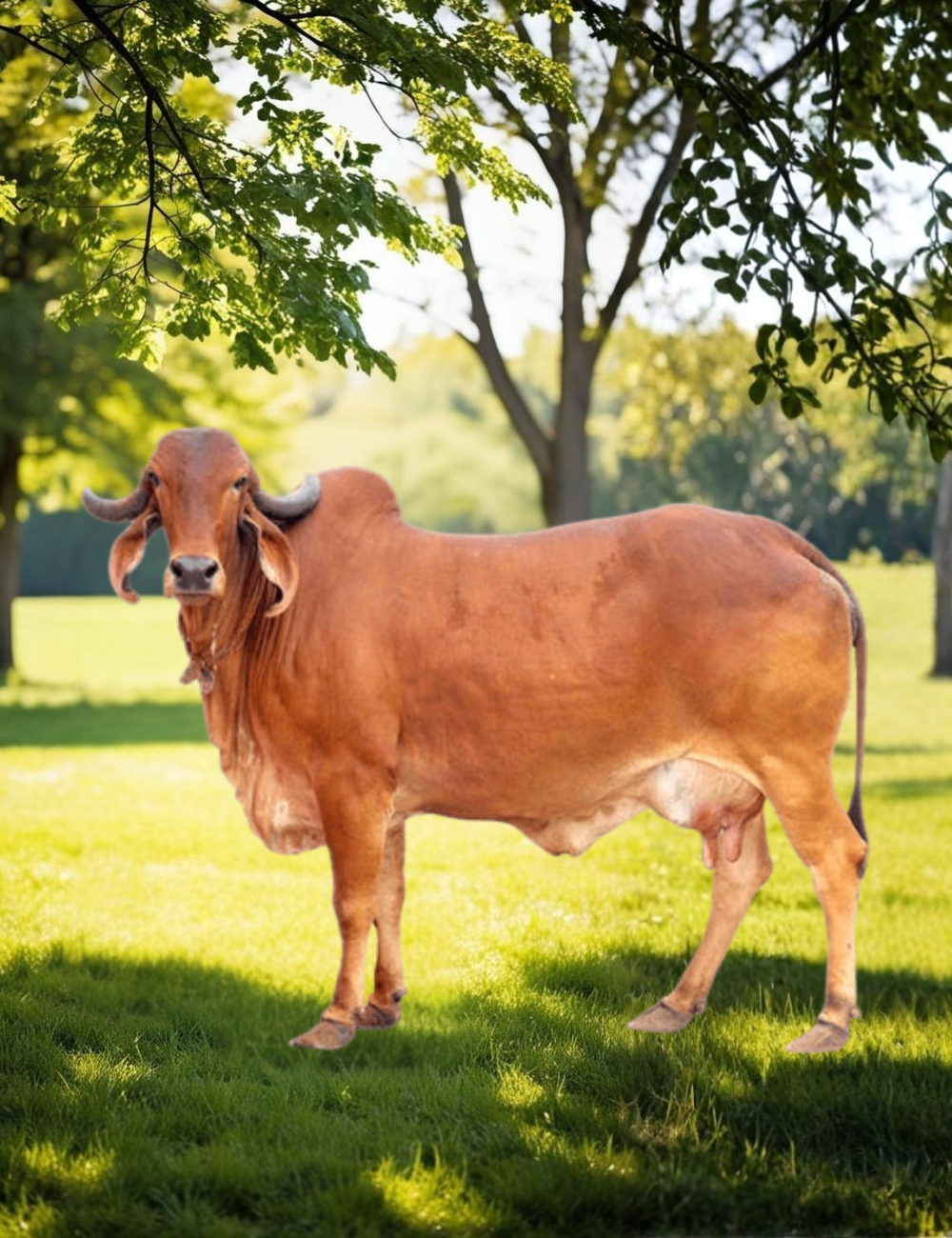
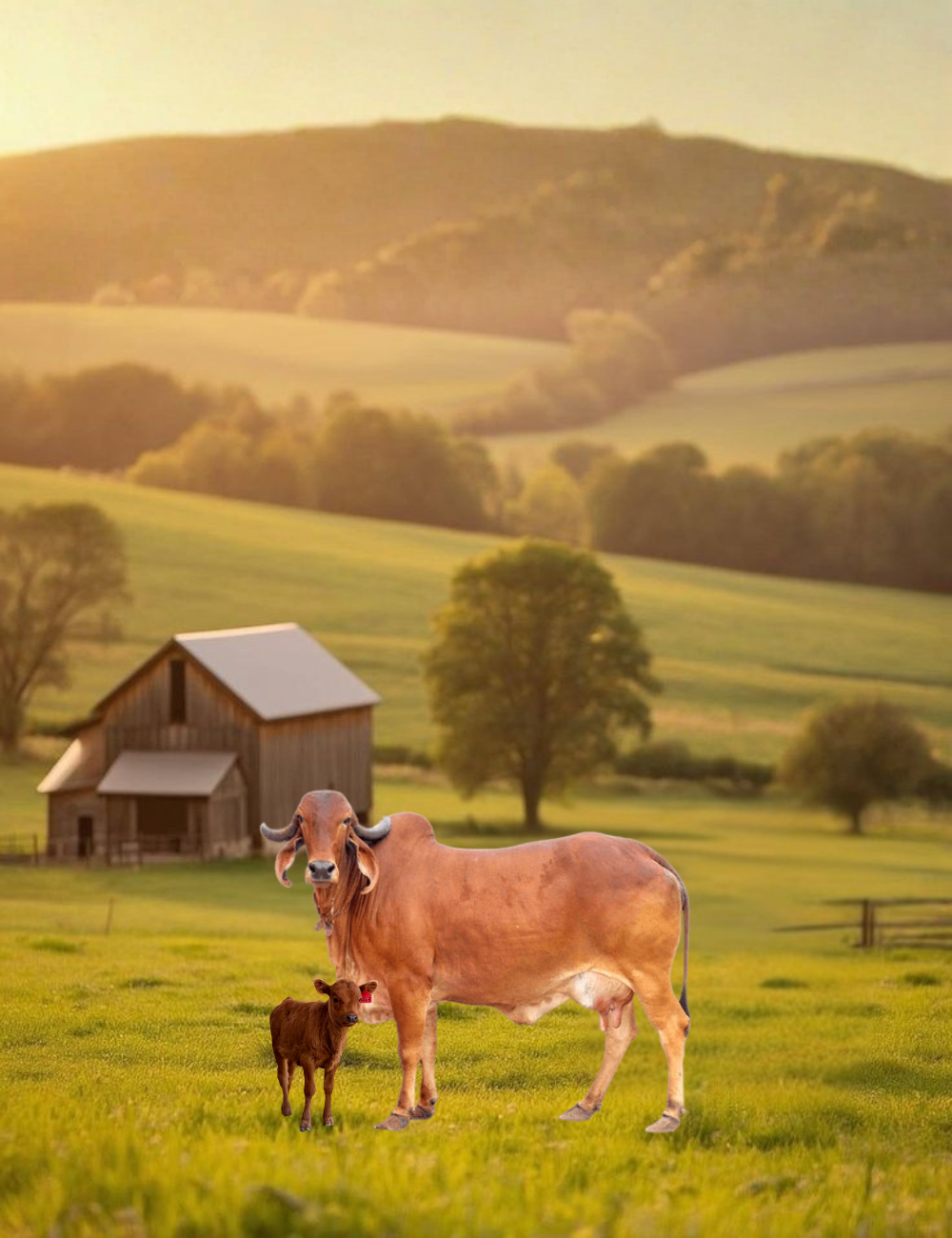
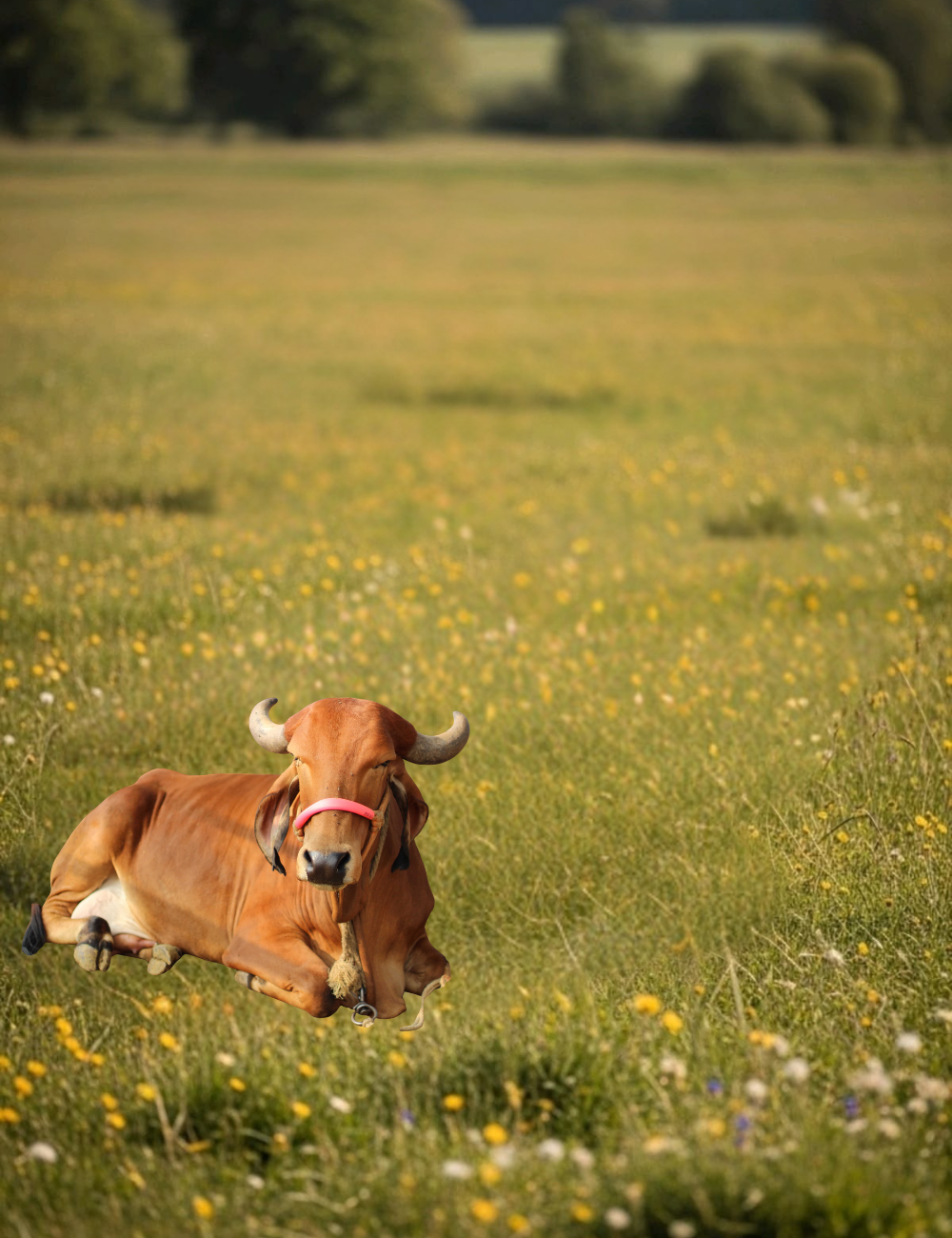
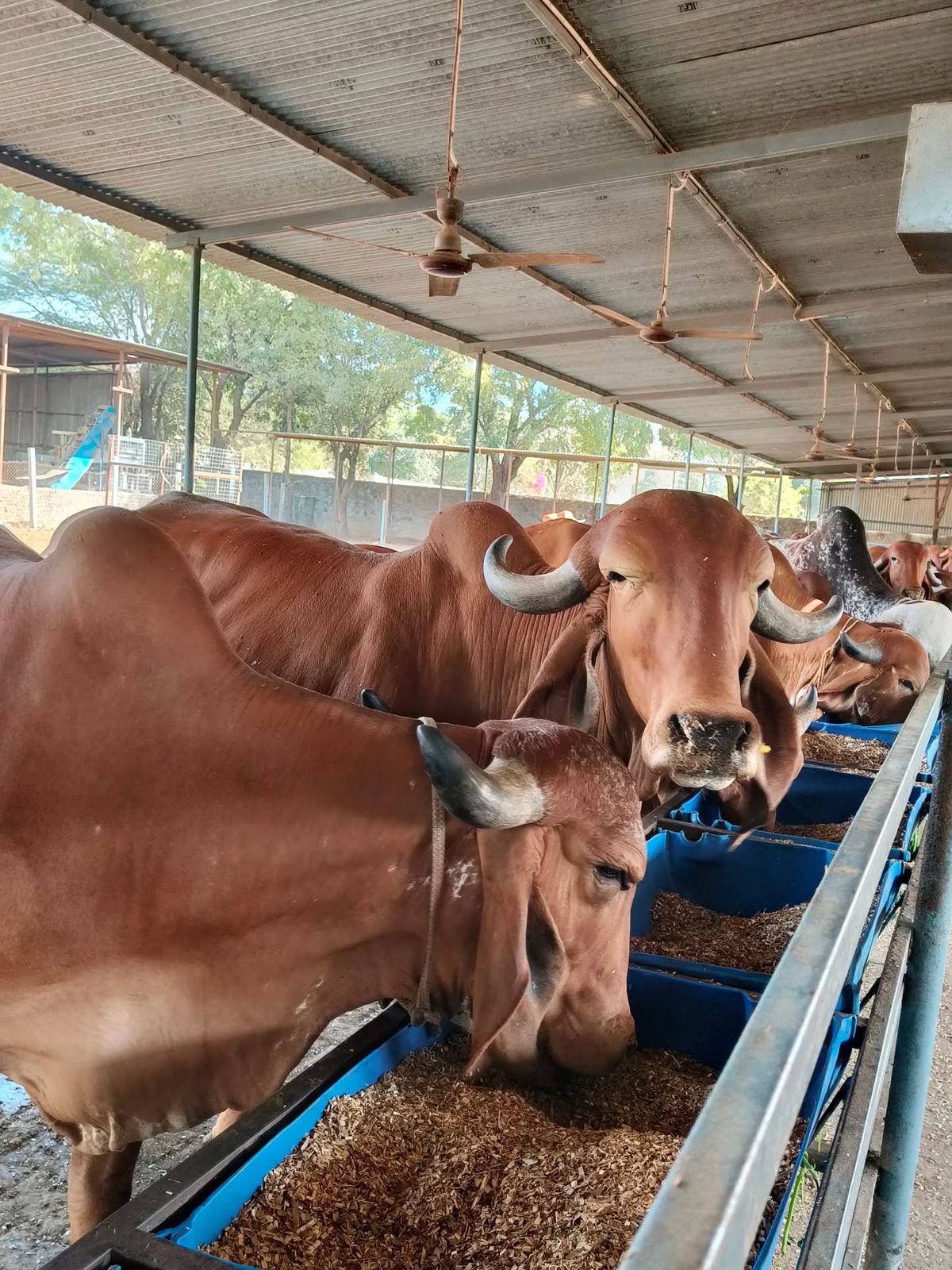
The dome-shaped, convex forehead is the fastest identification point. No other cattle breed in the world has a forehead that curves outward as strongly as the Gir cow. Check the forehead first. If it is flat, the cow is not a pure Gir.
Pure Gir cows range from red to yellowish-red to spotted white. Many have large red or brown patches. Their skin is soft, thin, and glossy. Black is the one color that does not appear in a genuine Gir cow.
Check five things: dome forehead, spiral horns, leaf-folded ears, long tail (reaching near ground level), and black hooves. A pure Gir cow shows all five clearly. Hybrids show some but not all. The dome forehead and spiral horns together are the most reliable combination.
A fully grown Gir cow weighs 400 to 475 kg and stands 1.30 to 1.35 meters tall. A Gir bull weighs 550 to 650 kg and stands 1.35 to 1.40 meters tall. A newborn Gir calf weighs between 20 and 30 kg.
In India, a Gir cow produces 6 to 12 liters of milk per day. In Brazil, under commercial dairy conditions, Gir cows produce up to 3,500 kg per lactation. The world record belongs to a Brazilian Gir cow at 17,120 kg in a single lactation.